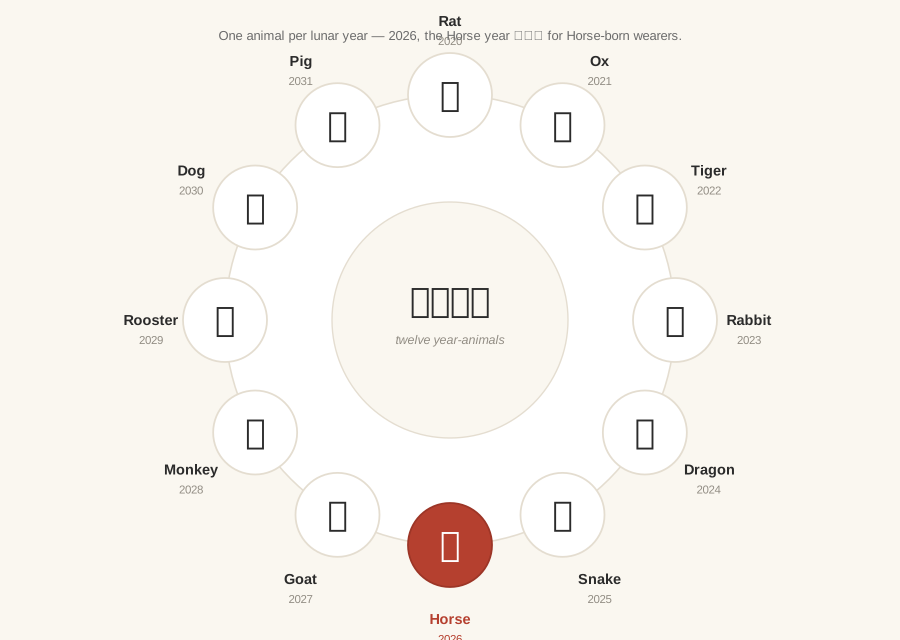
Ask a Western audience about Chinese astrology and you will hear about animals. Ask a traditional practitioner and you will hear about branches — the twelve Earthly Branches (地支), a twelve-part cycle that organised days, months, years and hours long before anyone attached a zoo to it. The animals are the folk memory of a much older counting system.
Where the animals came from
The honest answer is: nobody knows, and the charming story you have heard — the Jade Emperor's river race — is folklore of fairly recent vintage. What the tradition itself says is more mundane and more interesting: each branch already had a character, an element, a direction and a double-hour. The animals matched to it (rat for midnight, horse for noon, and so on) made an abstract calendar memorable to people who could not read. They worked the way rhymes work.
What your year animal actually means
In a full chart, the year pillar describes your roots: the generation you belong to, your ancestry, the broad weather of your era. It is the most public, most superficial layer of the eight characters — which is why "what year were you" is such an easy icebreaker, and why reading a whole personality from it is doing the tradition badly.
- Rat 鼠 — resourcefulness, stored grain, quick observation.
- Ox 牛 — patient strength, endurance, method.
- Tiger 虎 — courage, territory, sudden movement.
- Rabbit 兔 — diplomacy, refinement, quiet luck.
- Dragon 龙 — vitality, authority, the only mythical beast.
- Snake 蛇 — insight, patience, transformation.
- Horse 马 — drive, freedom, travel and momentum.
- Goat 羊 — gentleness, artistry, care.
- Monkey 猴 — wit, flexibility, problem-solving.
- Rooster 鸡 — precision, punctuality, showing up.
- Dog 狗 — loyalty, protection, duty.
- Pig 猪 — generosity, ease, sufficiency.
The year that belongs to you
Every twelfth year, your animal returns: your benming year (本命年). Tradition marks it with red — cord, underwear, bracelets — a custom big enough to have its own own article. And if you were born in a Horse year, 2026 is yours: our cinnabar zodiac bracelet exists precisely for this.
Want the animal to be the beginning of the reading rather than the whole of it? Run your full chart in the element quiz and see what the other seven characters are doing.
Want this read on your own chart?
Two minutes, full birth data, no email needed — see which element your chart can actually use.
Keep reading
Which wrist to wear it on
Left or right? What tradition says — and why it matters less than sellers claim.
Read the article → CultureRed cords & your zodiac year
Why red is the colour of one's own year, and who traditionally wears it.
Read the article → StonesCinnabar: the red of tradition
Why 朱砂 shows up in every Chinese protection ornament — and what it is actually made of.
Read the article →