BaZi (八字, literally "eight characters") is the classical Chinese way of writing down the moment you were born — and then reading it. Not with star signs, but with the same two counting systems that organise the traditional calendar: ten Heavenly Stems and twelve Earthly Branches. Pair them up and you get a sixty-day, sixty-month, sixty-year rhythm that has run continuously in Chinese record-keeping for well over two thousand years.
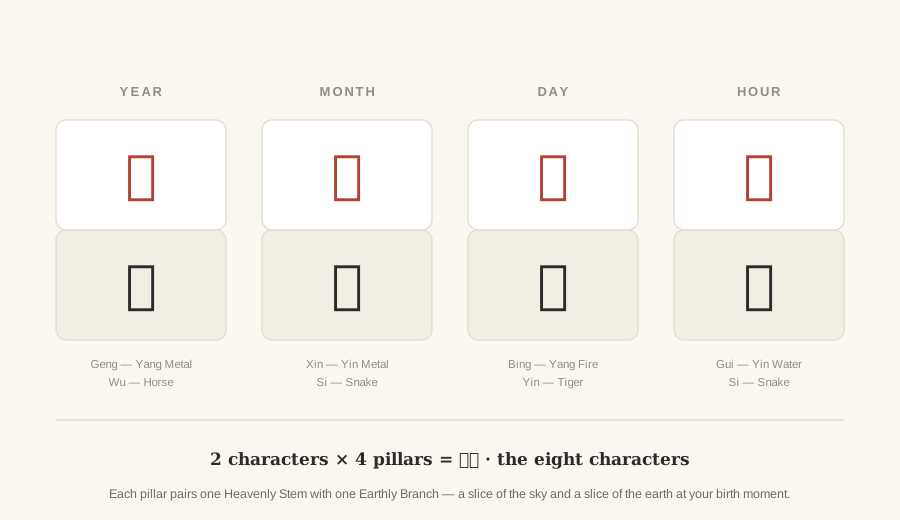
Take one moment — say 14 May 1990, 10:30 in the morning. In BaZi that moment becomes four pairs of characters, one pair for the year, one for the month, one for the day and one for the hour:
Each of the eight characters belongs to one of the five elements — wood, fire, earth, metal or water. So a birth chart is, in the most literal sense, a small weather report of the five elements at the exact minute you arrived.
What a reading actually says
A traditional practitioner reads the balance of those eight characters: which elements are strong, which are thin, which ones the chart "leans on". The vocabulary is agricultural and seasonal — a chart can be dry and need water, frozen and need fire, scattered and need earth to hold it. That is the level most readings operate at: climate, not fortune-telling.
Why the hour matters more than quizzes admit
Most free element quizzes stop at your birth year. That gives you two characters out of eight. The day stem — your "day master" — and the hour pillar, which describes your inner life and late-in-life energy, are both invisible. Two people born the same year can need completely opposite elements once the day and hour are counted.
That is why our element quiz asks for your full birth date, time, and place — the place matters because of true solar time, the clock correction most quiz sites skip.
From chart to bracelet
Once the chart is read, the practical part is old and simple: wear the element the chart can best use. A wood-supporting chart might call for green-toned beads; a chart that leans cold might call for cinnabar's fire. The bracelet is the remedy, the chart is the diagnosis — in exactly that order, and never the other way round.
If you want to see the mechanism before the jewellery, start with the five elements, explained properly, or read how we turn a chart into a recommendation on our method page.
Want this read on your own chart?
Two minutes, full birth data, no email needed — see which element your chart can actually use.
Keep reading
The five elements, explained properly
Wood, fire, earth, metal, water — what each element meant in the classical texts.
Read the article → FoundationsFavourable ≠ missing
The single most misunderstood rule in five-element advice, explained with a real chart.
Read the article → FoundationsTrue solar time
Why 12:30 in Kashgar is not 12:30 in Shanghai — and how it can change your chart.
Read the article →